

Ultimate Guide to Post-Workout Nutrition
Post-workout nutrition is essential for recovery. After exercise, your body needs specific nutrients to repair muscles, restore energy, and rehydrate. Here’s what you need to know:
- Protein: Helps rebuild muscle. Aim for 20–40 grams within 2 hours post-exercise.
- Carbohydrates: Replenish energy. Consume 1–1.2 grams per kilogram of body weight every hour for the first 4 hours after working out.
- Hydration: Replace fluids lost during exercise. Drink 20–24 ounces of water for every pound lost, and include electrolytes like sodium and potassium.
Timing matters. Eating protein and carbs within 30 minutes to 2 hours post-workout accelerates recovery. Supplements like protein powder, creatine, and BCAAs can also support muscle repair and energy restoration. Tailor your post-workout meals to your fitness goals - whether it’s muscle gain, fat loss, or endurance training - and avoid skipping meals or relying on sugary snacks. Recovery is just as important as the workout itself.
How Your Body Recovers After Exercise
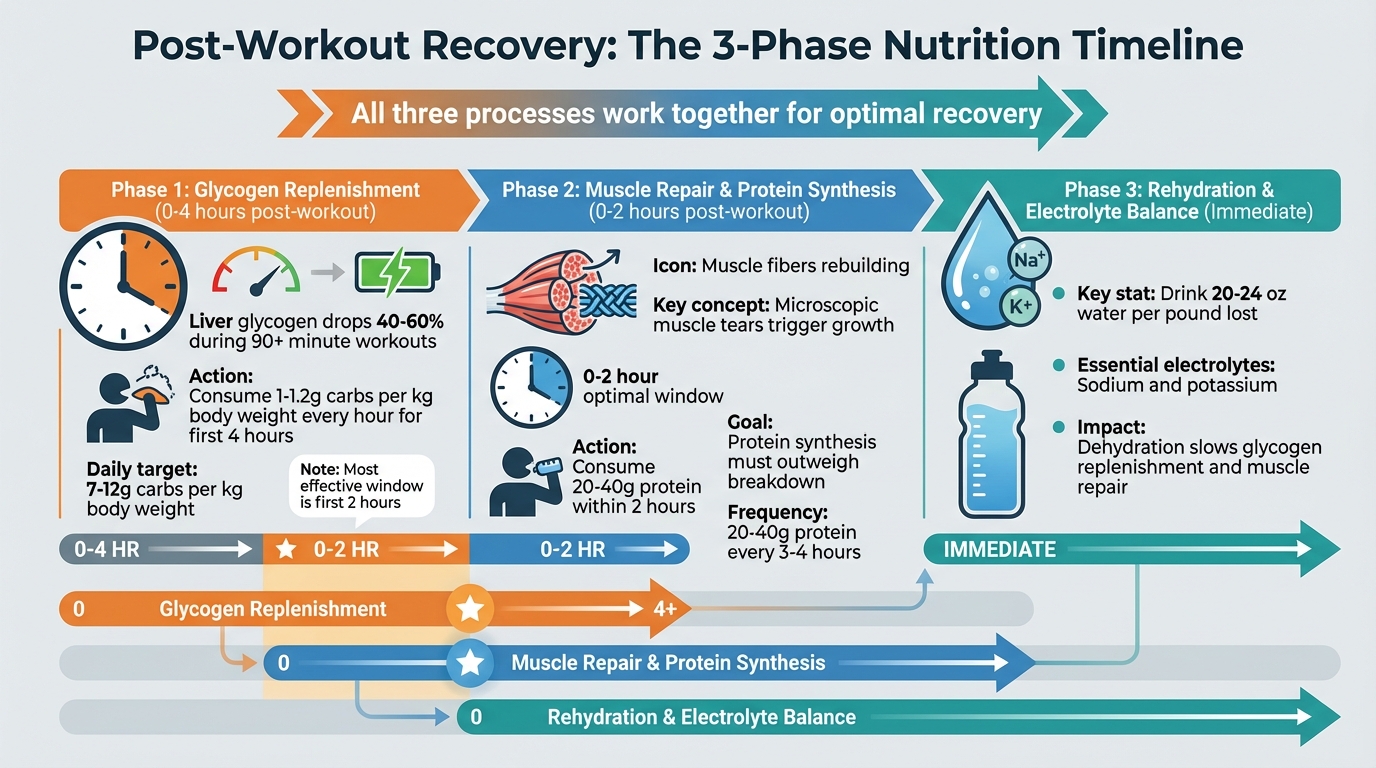
Post-Workout Recovery: The 3-Phase Nutrition Timeline
As soon as you wrap up a workout, your body kicks into recovery mode. Three main tasks take center stage: refilling glycogen stores, repairing muscle fibers, and rehydrating by replacing fluids and electrolytes. These processes rely heavily on proper nutrition.
Glycogen Replenishment
During exercise, your body taps into its carbohydrate reserves, burning through muscle and liver glycogen for energy. In workouts lasting over 90 minutes, liver glycogen levels can drop by 40–60%. If you don’t refuel properly, this depletion can hurt your performance in future sessions.
The window for refueling muscle glycogen is most effective during the first two hours after exercise. To fully restore glycogen levels, aim for 7–12 grams of carbohydrates per kilogram of body weight daily. Liver glycogen, on the other hand, takes longer to replenish and benefits from a mix of glucose and fructose to speed up the process while minimizing any discomfort. Waiting even two hours to consume carbs can lower muscle glycogen levels and impact how well you perform in your next workout. For quick recovery between sessions, aim for 1–1.2 grams of carbohydrates per kilogram of body weight every hour for the first four hours post-exercise.
Now, let’s dive into how protein helps repair muscles after exercise.
Muscle Repair and Protein Synthesis
When you exercise, your muscles experience tiny tears at the microscopic level. While this might sound alarming, it’s actually a good thing - it’s the trigger for building stronger, more resilient muscles. This repair process, called muscle protein synthesis (MPS), rebuilds damaged muscle fibers into tougher versions.
After a workout, your body increases both protein breakdown and synthesis. Consuming enough protein ensures that synthesis outweighs breakdown, creating a positive protein balance. This balance is key to muscle growth and adaptation. Without adequate protein intake, your body might struggle to repair itself efficiently, slowing recovery and limiting your progress.
Once your muscles are on the mend, rehydration becomes the final piece of the recovery puzzle.
Rehydration and Electrolyte Balance
Sweating during exercise - especially in hot or humid conditions - leads to significant fluid and electrolyte losses. This dehydration can slow down glycogen replenishment and muscle repair, while also taking a toll on your overall performance and well-being. Rehydration restores these losses, helping you bounce back for your next session.
But water alone won’t cut it. To fully rehydrate, you need to replace lost electrolytes, particularly sodium and potassium. These minerals are essential for proper fluid absorption and recovery. Without them, your body might not fully utilize the fluids you’re drinking, leaving you less prepared for your next workout.
Core Principles of Post-Workout Nutrition
To get the most out of your recovery, focus on three key areas: timing your meals, selecting the right nutrients, and staying properly hydrated. These principles will shape how you plan your meals and choose supplements in the next steps.
Nutrient Timing
Timing matters when it comes to post-workout nutrition. Eating the right nutrients shortly after exercising helps repair muscles and replenish glycogen stores. For muscle growth, aim to consume protein within two hours after your workout. This timing is critical for creating effective post-workout meals.
Protein and Carbohydrate Goals
Protein and carbohydrates are the building blocks of recovery. Protein supports muscle repair and growth, while carbohydrates replenish glycogen stores. The International Society of Sports Nutrition suggests consuming 20–40 grams of protein every three to four hours. Make sure your post-workout meal includes both macronutrients to maximize recovery.
Hydration and Electrolytes
Rehydration is just as important as eating the right foods. Replace fluids by drinking 20–24 ounces of water for every pound lost during exercise. For example, if you lose two pounds, you’ll need 40–48 ounces of water to rehydrate completely.
"For each pound of water lost during training, you should drink 20 to 24 ounces of fluid." - Memorial Hermann
Instead of relying on sugary sports drinks, get electrolytes like sodium, potassium, and magnesium from whole foods. Great options include berries, melons, oranges, leafy greens (like spinach or lettuce), fatty fish such as salmon or tuna, low-fat dairy, and nuts and seeds.
Building Balanced Post-Workout Meals
Crafting the perfect post-workout meal doesn’t have to be complicated. The key is to combine a solid source of protein with carbohydrates to help your muscles recover and replenish their energy stores.
How to Build Your Plate
Start with the basics: aim for 25–30 grams of protein, pair it with carbohydrates that match your workout intensity and body weight, and don’t forget to hydrate. Endurance athletes, for example, might need more carbs to replenish glycogen. According to the International Society of Sports Nutrition, they recommend 3.6 to 5.5 grams of carbs per pound of body weight daily to keep glycogen levels topped off. After a tough workout, try consuming 0.4 grams of carbs per pound of body weight within four hours, along with 0.1 to 0.2 grams of protein per pound each hour to optimize recovery.
Meal Ideas for Different Goals
Here’s how you can tailor your post-workout meals to suit specific fitness objectives:
- For muscle gain: Go for protein-packed options like 6 ounces of grilled chicken breast (roughly 52 grams of protein) served with 1 cup of brown rice and steamed broccoli. Add two whole eggs to hit the leucine sweet spot - each egg provides about 500 milligrams of leucine, contributing to the recommended 700 to 3,000 milligrams needed for muscle protein synthesis.
- For fat loss: Choose lighter meals such as 5 ounces of salmon (around 35 grams of protein) paired with roasted sweet potato and a side of mixed greens.
- For endurance training: Focus on carb-heavy options like Greek yogurt topped with granola, fresh berries, and a drizzle of honey, or whole wheat pasta with lean turkey meatballs and marinara sauce.
Quick and Portable Recovery Options
When you’re on the move, recovery doesn’t have to take a back seat. Protein shakes and smoothies are easy go-to choices. Blend protein powder with a banana, some spinach, and almond milk for a recovery drink packed with 20–30 grams of protein. Other portable snacks include hard-boiled eggs, turkey roll-ups with whole-grain crackers, or Greek yogurt cups with trail mix. These options are quick to grab and help kick-start recovery right after your workout.
For overnight recovery, casein protein can be a game-changer. A 2020 research review suggests that consuming at least 40 grams of casein before bed may help reduce inflammation and speed up muscle repair.
Next up, we’ll dive into how targeted supplements can work hand-in-hand with these meals to further enhance recovery.
sbb-itb-f8dc669
Using Supplements for Recovery
Post-Workout Supplements That Work
Once you've nailed down a balanced post-workout meal plan, supplements can give your recovery an extra edge. For instance, protein powders are a quick and effective way to deliver high-quality protein, helping to kickstart muscle repair and growth. Creatine monohydrate not only aids in tissue repair but also enhances glycogen replenishment when paired with carbs. Meanwhile, BCAAs (branched-chain amino acids) are great for easing muscle soreness and lowering the risk of exercise-related injuries. Together, these supplements create a strong foundation for faster recovery and improved performance.
ZOR Supplements for Recovery

ZOR Supplements takes these recovery essentials to the next level with its specialized product lineup. ZOR Creatine features pure creatine monohydrate to support strength gains and speed up muscle recovery. Pair it with Sip N' Lift BCAA, packed with essential amino acids to help reduce soreness after intense workouts. For those aiming to boost strength and maintain hormonal balance, T-Storm combines Himalayan Shilajit with over 86 minerals to support energy levels and natural testosterone production. Plus, all ZOR products are gluten-free, sugar-free, lactose-free, non-GMO, and soy-free, making them accessible to a wide range of users.
The Role of Shilajit in Recovery
Shilajit, a mineral-rich substance sourced from the Himalayas, plays a key role in some of ZOR’s standout products like T-Storm and SNOW pre-workout. While research on Shilajit’s specific effects on post-workout recovery is still growing, its long history of traditional use suggests it’s a valuable addition to modern recovery routines. When paired with proper nutrition and other effective supplements, Shilajit can help round out a comprehensive recovery plan.
Tailoring Post-Workout Nutrition to Your Needs
Adjusting for Training Types
Your post-workout meal should match the demands of your workout. If you're focused on strength training, your muscles need extra protein to repair and grow. Aim for 20 to 40 grams of high-quality protein combined with complex carbs. For example, try grilled chicken with sweet potatoes or a protein shake mixed with oatmeal. On the other hand, endurance workouts - like long runs or cycling - deplete glycogen stores. To recover effectively, prioritize carbs to replenish those stores quickly. For high-intensity interval training (HIIT), which combines strength and endurance, balance your meals with moderate amounts of protein and carbs to address both muscle recovery and energy needs.
Once you've matched your meal to your workout, consider how your overall fitness goals influence your nutrition.
Adapting to Body Composition Goals
If your goal is building muscle, you'll need to eat slightly more calories than you burn, with protein taking center stage. Aim for 1.2 to 2 grams of protein per kilogram of body weight daily, especially if you're lifting regularly. Carbs are equally important for replenishing glycogen and aiding tissue repair. Including whole-food fats, like those in whole eggs or whole milk, can also enhance muscle protein synthesis better than low-fat options.
For those focused on losing fat, a calorie deficit is key. However, skipping post-workout meals after intense exercise can hurt recovery and performance.For lighter activities, such as a 20-minute walk, a dedicated post-workout meal isn't necessary - just stick to eating balanced meals every four to five hours.Women, in particular, should aim to refuel within 30 to 45 minutes of finishing their workout, as hormonal differences can shorten their recovery window compared to the three-hour window men typically have.
No matter your goals, avoiding common nutrition mistakes is crucial.
Avoiding Common Mistakes
Skipping your post-workout meal or failing to hydrate can significantly slow down recovery. Another common misstep is relying on sugary snacks like candy or soda after exercise. While these provide quick energy, they lack the protein and nutrients your muscles need. It's also important to steer clear of extreme fasting or trendy diets that drastically cut calories right after training. Instead, pay attention to your hunger cues and remember that the "anabolic window" for muscle recovery lasts several hours after your workout, giving you flexibility in when to eat.
Conclusion
Post-workout nutrition isn’t about sticking to rigid rules - it’s about understanding what your body needs and consistently giving it the fuel to recover. The essentials are straightforward: rehydrate, replenish glycogen stores, and repair muscle tissue. By combining quality protein sources with the right carbohydrates and staying hydrated, you create a solid foundation for better performance in your next session. And yes, this approach is supported by plenty of research.
Balanced macronutrient intake plays a big role in speeding up recovery. For example, studies show that protein powders and creatine monohydrate are excellent for muscle repair, especially when whole foods aren’t convenient. Whether you’re lifting heavy, running long distances, or tackling high-intensity interval training, tailoring your post-workout meal to match your specific activity can make a noticeable difference in how quickly you recover.
Personalization is where the magic happens. Your genetic makeup influences how your body processes and uses nutrients. A bodybuilder aiming for muscle growth will have very different needs compared to someone training for endurance or focusing on fat loss. Adjust your intake to align with your goals, and remember that the recovery window isn’t as short as you might think - it can last for several hours after exercise. This flexibility allows you to refuel in a way that fits your lifestyle while optimizing every phase of your training.
For most people, aiming for 20 to 40 grams of protein within a few hours of working out, paired with carbs suited to your workout intensity, is a great starting point. Don’t forget hydration - it’s just as critical. Products like ZOR Supplements' SNOW pre-workout, Sip N' Lift BCAAs, and pure Creatine can complement your recovery plan. As you progress, fine-tune your approach to meet your evolving needs.
Your post-workout nutrition strategy should grow alongside your training. What works during a strength-building phase might need adjustments when you’re cutting. Keep experimenting, stay informed, and treat recovery with the same importance as your workouts. After all, the real gains come not just from the effort you put in at the gym but also from how well you refuel afterward. By applying these strategies consistently, you can turn your recovery into a key advantage for better performance.
FAQs
How can I adjust my post-workout nutrition to achieve goals like building muscle or losing fat?
To support muscle growth, try to eat 20-30 grams of protein paired with a carbohydrate source within 30-60 minutes after exercising. This combination helps repair muscle fibers and restores glycogen levels. Some great post-workout choices include a protein shake blended with fruit, grilled chicken served with rice, or Greek yogurt topped with granola.
If your goal is fat loss, focus on high-protein, low-sugar foods while keeping carbs at a moderate level. Steer clear of foods loaded with fats or added sugars, as they can pack on extra calories without aiding recovery. Lean proteins like eggs, turkey, or a protein shake combined with vegetables or a small portion of whole grains are excellent options to support recovery and stick to your calorie goals.
What are the best portable recovery snacks for busy people after a workout?
After a workout, quick and easy recovery options can make all the difference. For rehydration, water or electrolyte-infused drinks are excellent choices. Need natural carbs? Grab some fresh fruit like bananas or oranges. For a balanced mix of protein and carbs, low-fat chocolate milk is a surprisingly effective option. If you're on the go, energy bars or trail mix with nuts and dried fruit provide a handy combination of protein, healthy fats, and carbohydrates to help you refuel.
How do creatine and BCAAs support recovery after a workout?
Creatine works to accelerate post-workout recovery by restoring your muscles' phosphocreatine levels. This process boosts energy production, which is crucial for muscle repair and building strength.
On the other hand, BCAAs (branched-chain amino acids) contribute to recovery by promoting muscle protein synthesis, easing soreness, and supplying the essential amino acids your body requires to repair and rebuild muscle tissue. When used together, these supplements can help you bounce back quicker and be ready to crush your next workout.