

When Should You Take BCAAs? Complete Guide
Want to boost muscle growth, reduce fatigue, or recover faster? Timing your BCAA intake is key. Here's the quick answer:
- Pre-Workout (20–45 mins before): Prepares muscles and delays fatigue. Ideal for strength training or fasted cardio.
- During Workout: Helps maintain energy and focus, especially for sessions over 60 minutes.
- Post-Workout (30–60 mins after): Supports muscle repair and reduces soreness.
- Rest Days: Maintains recovery and prevents muscle breakdown.
BCAAs (leucine, isoleucine, valine) are absorbed quickly, making them effective when timed around workouts. Aim for 5–10 grams per serving, with a 2:1:1 ratio of leucine to the others. Adjust timing based on your goals - whether building muscle, cutting fat, or improving endurance.
Keep reading for detailed benefits, dosages, and tips to maximize results.
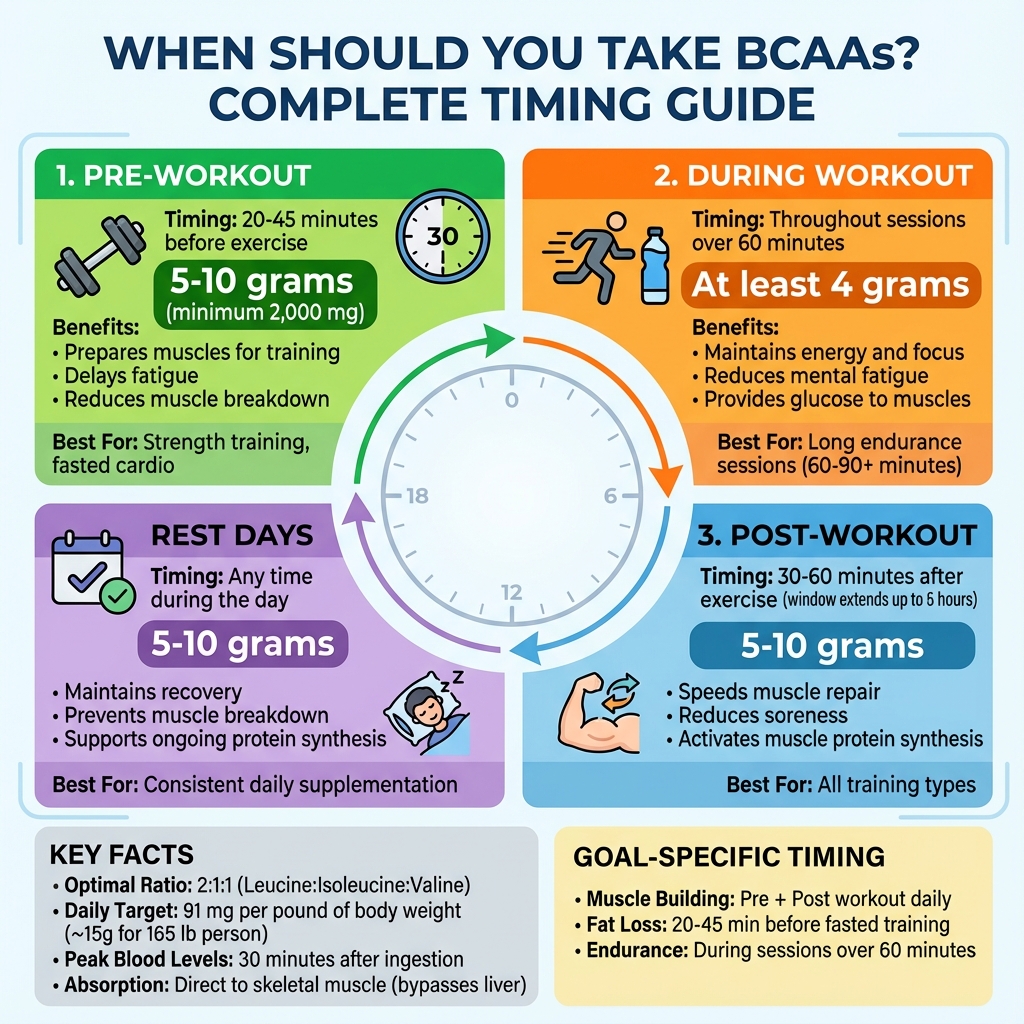
BCAA Timing Guide: When to Take BCAAs for Optimal Results
To understand why timing matters when it comes to BCAAs, it's helpful to know how they work in your body. These amino acids take a unique metabolic route, making them especially useful for athletes aiming to optimize their performance and recovery.
Absorption and Blood Levels
BCAAs are absorbed differently compared to other nutrients, which is part of what makes them so effective. Unlike many other amino acids, BCAAs bypass the liver and head straight to skeletal muscle, allowing for rapid absorption. After taking a BCAA supplement, plasma levels begin to rise in about 15 minutes and typically peak around the 30-minute mark. The dosage also plays a role in how long these elevated levels last: higher doses (2,000 mg or more) keep plasma levels elevated for up to two hours, while smaller doses (1,000 mg or less) return to baseline within an hour.
Free-form BCAA supplements are absorbed faster than the peptide-bound forms found in protein-rich foods like whey. If you take BCAAs on an empty stomach, you may enhance absorption even further.
Leucine and Muscle Protein Synthesis
Leucine is the star player when it comes to muscle repair and growth. It activates the mTOR pathway, a critical regulator of muscle protein synthesis (MPS), which is essential for recovery. Most BCAA supplements use a 2:1:1 ratio, meaning they contain twice as much leucine as isoleucine or valine.
While leucine alone can trigger MPS, research shows that the combination of all three BCAAs leads to better results. As Wellbeing Nutrition puts it:
"Research indicates that leucine alone can stimulate muscle protein synthesis, but the combination of all three BCAAs provides superior results for muscle recovery and growth compared to leucine supplementation alone."
Because BCAAs are absorbed directly into muscle tissue, they not only accelerate protein synthesis but also help reduce muscle breakdown. They account for about 35% of the essential amino acids in muscle tissue, making them a major contributor to recovery. This quick activation of MPS also plays a role in managing exercise-induced fatigue.
BCAAs and Exercise Fatigue
BCAAs do more than just support your muscles - they also help your brain during exercise. They compete with tryptophan, a precursor to serotonin, for entry into the brain. Since serotonin is linked to feelings of tiredness during long or intense workouts, reducing its production can help you feel less fatigued. This mechanism lowers central fatigue and makes exercise feel less exhausting.
On top of that, BCAAs can act as an alternative energy source when your primary fuel stores, like glucose and glycogen, start running low during prolonged or high-intensity sessions. While they might not improve physical performance in endurance activities, research shows they are effective at reducing mental fatigue.
When to Take BCAAs
The right timing for BCAA supplementation depends on your workout routine and fitness objectives. Here's how to align your intake for better recovery, sustained energy, and muscle growth.
Pre-Workout (20–45 Minutes Before)
Taking BCAAs about 15–45 minutes before your workout can kickstart muscle recovery and help delay fatigue. This timing ensures that blood levels of BCAAs peak during your session, reducing muscle breakdown. For strength training, they act as a shield for your muscles during intense lifts. If you're doing fasted cardio, sipping BCAAs throughout the workout can be beneficial. A dose of at least 2,000 mg is enough to elevate blood concentrations, but many athletes prefer 5–10 grams for better results. For longer workouts, adding intra-workout BCAAs can help maintain these benefits.
During Your Workout
For sessions lasting 60–90 minutes, sipping BCAAs can keep your energy and focus steady. They work by competing with tryptophan for entry into the brain, which helps regulate serotonin levels and reduces fatigue. Isoleucine, one of the key BCAAs, helps deliver glucose to your muscles, providing extra energy. Studies on cyclists show that while BCAAs may not directly improve speed during endurance exercise, they do lower mental fatigue and make the workout feel less taxing. Aim for a serving of at least 4 grams during your workout.
Post-Workout and Rest Days
After exercising, and even on your rest days, BCAAs play a role in ongoing muscle recovery. The best time to take them is within 30–60 minutes post-workout, as this is when your body is primed to absorb nutrients. However, this window can extend up to 5 hours. Post-workout BCAAs speed up muscle repair. On rest days, they help maintain muscle protein synthesis, prevent muscle breakdown, and support overall recovery, even when you're not hitting the gym.
sbb-itb-f8dc669
BCAA Timing for Different Fitness Goals
When and how you take BCAAs can make a big difference, depending on your fitness goals. Whether you’re focused on building muscle, shedding fat, or improving endurance, aligning your BCAA timing with your objectives is crucial.
Building Muscle and Strength
If your goal is muscle growth, your total daily intake of BCAAs matters more than the exact timing. Aim for about 91 mg of BCAAs per pound of body weight daily - that’s roughly 15 grams for someone weighing 165 pounds. Splitting this dose between pre- and post-workout sessions ensures a steady supply of leucine, which helps activate mTOR, a key player in muscle growth. Consistency is key: take BCAAs daily, even on rest days, for at least 10 days to maximize their muscle-protective benefits. A 2:1:1 ratio of leucine to isoleucine to valine is often recommended to enhance the anabolic response.
Fat Loss and Cutting
When cutting calories, BCAAs can help you hold onto lean muscle while in a calorie deficit. While they don’t directly burn fat, they prevent your body from breaking down muscle for energy. For best results, take BCAAs 20–45 minutes before fasted cardio or strength training - this is especially helpful if you’re training on an empty stomach or with low carbohydrate intake. A post-workout dose, ideally within 30–60 minutes, supports recovery. On low-calorie days, BCAAs can also help maintain performance by reducing muscle breakdown.
Endurance Training
During long endurance activities, BCAAs can act as a quick fuel source and help combat fatigue. If your session lasts over 60 minutes, aim to consume at least 4 grams of BCAAs to delay mental fatigue, conserve muscle glycogen, and reduce muscle breakdown. Follow up with a post-session dose to aid recovery. While BCAAs won’t necessarily make you faster, they can help you stay mentally sharp during prolonged efforts. For athletes tackling multiple sessions or tournaments in a day, taking BCAAs between events can speed up recovery and keep energy levels steady.
How to Use BCAAs Safely and Effectively
Recommended Dosages
For most people, a serving of 5–10 grams of BCAAs works well. To give you an idea, if you weigh around 165 pounds, you might aim for about 15 grams daily, while someone closer to 180 pounds could need around 16 grams. It's a good idea to split your daily intake into two or more servings, like pre- and post-workout, to keep blood levels steady. Timing your doses around workouts - before, during, or after - can enhance their effectiveness. Always check the label on your specific product for detailed instructions since different formulations can vary.
Safety Guidelines
When used correctly, BCAAs are considered safe for healthy adults. That said, some people may experience mild side effects like nausea, headaches, or fatigue, especially when starting out or taking higher doses. To reduce these effects, drink an extra 8–16 ounces of water with each dose. If you have medical conditions like liver disease, kidney disease, or diabetes, talk to your doctor first, as BCAAs can affect blood sugar levels and may interact with certain medications.Pregnant or breastfeeding women should only use BCAAs if specifically recommended by their healthcare provider. Research suggests that doses of up to 12 grams daily are likely safe for up to two years.
Practical Usage Tips
Once you’ve got the dosage and safety down, here are some tips to make BCAAs a part of your daily routine. Choose a format that works for you - powder is easy to mix into water or shakes and absorbs quickly, while capsules are perfect for busy days. If you go for flavored powders, keep an eye on artificial sweeteners or sugar alcohols, as they might cause bloating or digestive discomfort. Space out your doses by a few hours to stimulate muscle protein synthesis rather than keeping levels flat. And don’t skip BCAAs on rest days - consistent use helps maintain their muscle-protective benefits over time.
Conclusion
Making the most of your BCAAs boils down to two key factors: timing and consistency. While your overall daily intake lays the groundwork for long-term benefits, strategically timing your BCAA doses - whether before, during, or after your workouts - can provide an extra edge. This approach is particularly helpful when you're pushing through intense training, cutting calories, or aiming to boost performance.
The concept of the "anabolic window" after exercise highlights this idea. Contrary to the belief that this window is limited to just 30 minutes post-workout, research suggests it may remain open for several hours. This means you have more flexibility to align your BCAA intake with your training schedule. Taking BCAAs 20–45 minutes before exercise, sipping on them during your session, or consuming them immediately afterward can help optimize their benefits. Since BCAA levels in the blood typically peak 30–60 minutes after ingestion, syncing this timing with your workout needs can make a noticeable difference.
Tailor your BCAA timing to match your fitness goals - whether you're focused on building muscle, maintaining lean mass during a calorie deficit, or combating endurance fatigue.
Keep in mind that BCAAs work best when they’re part of a well-rounded routine. This includes proper nutrition, adequate protein intake, and consistent training. Incorporating BCAAs daily can support ongoing muscle repair and recovery.Whether you prefer mixing a powder into your water or taking capsules on the go, the most effective timing is the one that fits smoothly into your lifestyle.
FAQs
How do BCAAs help fight fatigue during exercise?
BCAAs might play a role in reducing exercise-related fatigue by affecting serotonin production in the brain. When you exercise, serotonin levels tend to rise, which can contribute to that familiar sensation of tiredness. By helping to lower these levels, BCAAs could help you feel more energized, enabling you to push through longer and more challenging workouts.
This potential makes BCAAs particularly appealing for endurance sports or high-intensity training, as they may help you sustain your performance and keep fatigue at bay.
What’s the ideal BCAA dosage for building muscle?
To support muscle growth effectively, aim for a daily intake of 91 mg per pound of body weight (or 200 mg per kilogram). Split this amount into two or more servings throughout the day. For workout recovery and muscle repair, consider taking 5–10 grams per serving around your exercise sessions. Adjust these amounts based on your activity level and fitness goals to tailor them to your needs.
Are BCAAs useful on rest days?
Taking BCAAs on rest days can be a smart move to support muscle recovery, ease soreness, and reduce the chances of muscle breakdown. Even when you're not hitting the gym, your body is still hard at work repairing and rebuilding muscle tissue. BCAAs supply the essential amino acids needed to help with this process.
If you're following a tough training schedule or working to preserve muscle during recovery, adding BCAAs to your daily routine can make a noticeable difference.